How to Grow Beautiful Oakleaf Hydrangeas
Grow beautiful oakleaf Hydrangeas in your yard with these planting tips. There are a variety of hydrangeas to choose from, many of which are derived from plants native to China, Japan, and nearby islands. However, one hydrangea is native to the US: the oakleaf hydrangea, which is native to the country’s southeastern area.
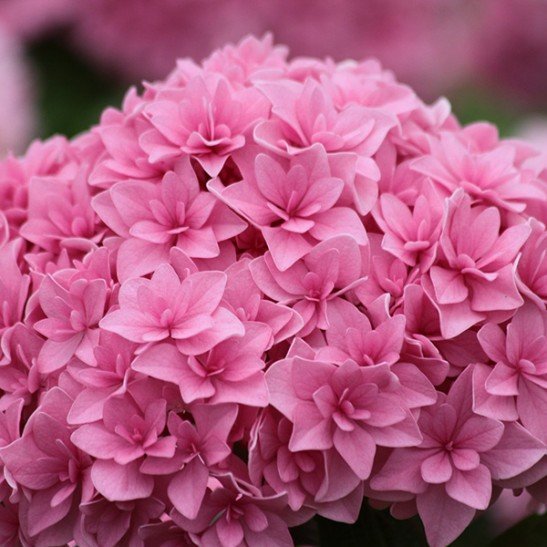
There are several dwarf and larger varieties of oakleaf hydrangeas. At maturity, dwarf oakleaf hydrangeas grow between 3 and 4 feet tall and wide, while the average mature size of most varieties is between 6 and 8 feet tall and wide. These stunning shrubs bloom from May to July, with white blooms turning to shades of pink and purple. The fall season sees leaves turn to purple, red, and bronze colors.
Plant dwarf-size varieties in a container or on the ground. Grow the taller varieties in the ground. Plant larger varieties in mass for a dramatic impact. A deciduous shrub that loses its leaves in the fall is hardy up to zone 5. Grow Oakleaf Hydrangeas in full sun in colder climates. In warmer climates, grow oakleaf hydrangeas in the shade to avoid the sun’s intensity.
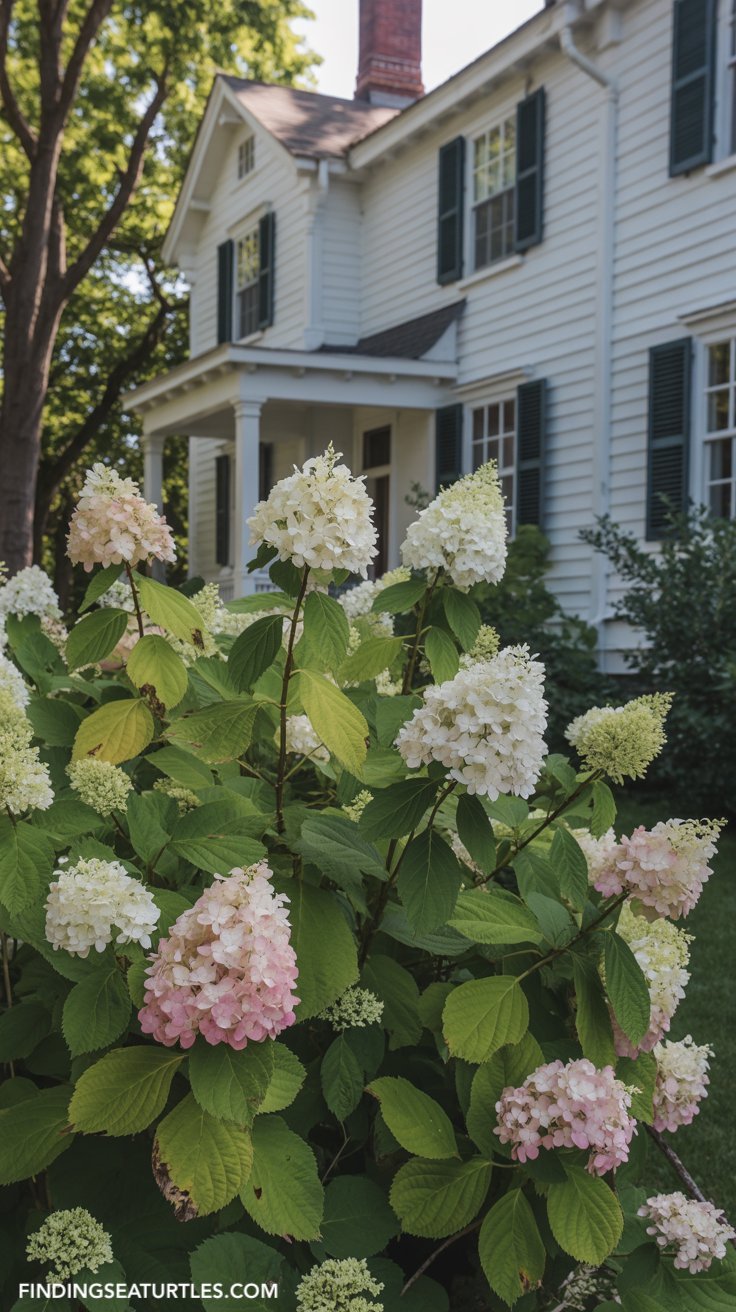
Characteristics of Oakleaf Hydrangeas
This variety of hydrangeas has a compact, upright-mounding shape. A free branch habit with solid stems. The branches support the panicle, which blooms upright without any hanging downward. Exceptionally hardy, thriving in zones up to 9.
First, the characteristics of the Little Lime Hydrangea shrub:
- Grows in zones 5 to 9
- Plant in full Sun to partial shade
- At maturity, it reaches between 3 to 5 feet high with 3 to 5 feet spread
- Blooms in lime green color aging to pink and later burgundy in the Fall
- Flowers are upright, sharply-pointed conical panicles growing 6 to 8 inches long
- Bloom from early summer to late summer
- Foliage leaves are green
- Water needs are average, so water regularly
- Grows best in organically rich soil conditions that drain well; avoid clay soil
- The growth rate is average
Remember, plants thrive in full sun with six or more hours of sun. Plants with partial sun requirements thrive for 4 to 6 hours daily. Meanwhile, full-shade plants need up to 4 hours daily.
Conditions for Growing Healthy Oakleaf Hydrangeas
Give your Oakleaf Hydrangea a leg up by providing the best-growing conditions—plant in the ground with well-draining soil. Organically rich soil is best. Water this shrub with an average amount of water to keep it moist.
Avoid dense soil that retains water, such as clay soil. An easy way to test your soil is to grab a handful and close your hand. Then, open your hand and examine the soil. If the soil stays compressed and remains in a clump, it is clay. If the soil is loose and quickly falls apart, it is organic and well-draining.
Organic soil has better drainage capabilities. Oakleaf hydrangeas do not like wet, soggy soil. Clay soil traps water and forms puddles. The water needs to drain away from the Oakleaf Hydrangea’s root system.
Ground Soil Preparation for Oakleaf Hydrangeas
Use these helpful tips to grow little lime hydrangeas for maximum curb appeal.
- Select a garden space with full sun or partially shaded based on your location.
- Prepare the soil by digging a hole twice the depth and width of your shrub.
- Add compost or rich organic soil and sphagnum peat moss to the soil (for best results, use 1/3 of your ground soil, 1/3 compost, and 1/3 sphagnum peat moss)
- Work the soil thoroughly so the soil and amendments are mixed well. This is essential to ensure that soil drains quickly.
- Potting soil and garden soil should release excess water quickly – this is necessary for hydrangeas to thrive.
- Sprinkle a handful of organic milky spore powder on the soil if grubs or Japanese Beetles are a problem. Follow the manufacturer’s instructions.
How to Grow Oakleaf Hydrangeas
Plant Little Lime in full sun in cooler climates and partial shade in warmer climates.
Group Little Lime Hydrangeas in mass, a mixed border, or the front yard to maximize curb appeal. Use as a single plant for a specimen, accent, or small hedge.
When planting several hydrangeas to form a hedge, space shrubs between 3 to 4 feet apart from the shrub center to the shrub center
Fertilize during the spring using a slow-releasing fertilizer such as Holly Tone per the manufacturer’s directions.
Fall or Spring Pruning
Cut back your shrubs to encourage more vibrant branch growth in late fall or early spring for best results. Allow the shrub to grow as a multi-stemmed shrub. Limit the number and size of branches for optimal shrub form.
Planting Season for Oakleaf Hydrangeas
- Plant Little Lime in the ground during the fall or early spring season. This allows the shrub to form strong roots before the hot summer begins.
- For container gardening, plant hydrangeas in the spring. Use a container slightly larger than the shrub’s container. During the fall season, remove the hydrangea from the container and plant in the ground to winter over.
Tips for Growing Oakleaf Hydrangeas
- Once established, water weekly
- Prune every spring to maintain healthy panicles.
- Garden styles for Little Lime Hydrangeas are suitable for formal, traditional, or cottage-style gardens.
- Grow this shrub as a specimen plant or a focal point in the garden.
Origination of Oakleaf Hydrangea
A newer introduction, Little Lime, was developed during a breeding program in Grand Haven, Michigan, in 2005. It started with a limelight hydrangea that was crossed with other hydrangea paniculatas, and then the little lime was born.
The original limelight, a woody shrub, is a cultivar of panicle hydrangea. The parent plant is native to eastern and southern China, Japan, and the Islands of Sakhalin and Kuril.
Companion Plants for Oakleaf Hydrangeas
Plant these companion plants with a limelight hydrangea
- coneflowers
- coral bells
- boxwoods
- Japanese holly
As you may have noticed, Little Limes are easy to grow and maintain. Start with selecting a sunny or partly sunny spot with great soil. Add water, and fertilize in the spring. They are easy to grow.
Gather a group of panicles for either fresh or dry flower arrangement.
This ends our post on how to grow little lime hydrangeas. Let us know if you plant a limelight in your garden. Do you have a favorite hydrangea?